table of contents
- Why China Wholesale Sourcing Still Delivers Real Margins
- What Makes a Reliable China Wholesale Website?
- 10 China Wholesale Websites Serious B2B Buyers Actually Use
- Alibaba – Best for Experienced Importers
- 1688.com – Best for Factory-Direct Low Prices
- Made-in-China – Best for Industrial Products
- DHGate – Best for Small Business Buyers
- Global Sources: Best for Verified Exporters
- AliExpress: Best for Sampling Before Bulk Orders
- Chinavasion: Best for Consumer Electronics Resellers
- Tomtop: Best for Consumer Electronics and Outdoor Gear
- Shein Wholesale: Best for Fashion Volume Buyers
- Direct Factory Sourcing via a Local Agent
- 10+ Legitimate China Wholesale Websites (2026 Update)
- How to Safely Buy Wholesale from China: My 5-Step Process
- How Do You Verify a China Post Tracking Number?
- Two Scams That Use Fake China Post Tracking Numbers
- Do You Really Need a China Sourcing Agent?
- Cheapest Ways to Import from China & Cut Logistics Costs
- What Does a Real China Post Tracking Number Look Like?
- How Can You Tell If a China Post Tracking Number Is Fake?
- How Do You Verify a China Post Tracking Number?
- Two Scams That Use Fake China Post Tracking Numbers
- Frequently Asked Questions About China Wholesale Sourcing
- Is it safe to buy wholesale from China?
- What’s the best website for buying from China as a beginner?
- Do I need to know Chinese to source from China?
- What’s the minimum order quantity for Alibaba?
- How long does shipping from China typically take?
- Should I use a sourcing agent?
- How do I verify if a Chinese supplier is legitimate?
- What payment methods are safest when buying from China?
- Work with Sourcing Agents Who Handle Shipments Directly
China produces 28% of global manufacturing output, more than the US, Germany, and Japan combined (World Bank, 2024). For B2B buyers in West Africa, South America, and the Middle East, that concentration means real pricing advantages that are hard to replicate anywhere else. But which China wholesale website you use matters as much as what you order.
Our team at YiwuAgent sources on behalf of international buyers from our base in Yiwu, the city at the centre of China’s wholesale supply chain. We’ve placed orders on all the major platforms. Some are genuinely useful for serious importers. Others are better suited for one-off testing. A few have structural risks that most buyers don’t discover until after a bad order.
Here’s our honest breakdown, platform by platform, with no affiliate relationships affecting what we say.
Key Takeaways
- Alibaba’s Trade Assurance program is the safest buyer protection on any China wholesale platform. Use it on every first order with a new supplier.
- 1688.com prices run 30–50% below Alibaba’s international listings for the same products, but it requires a Chinese-language agent to place orders.
- DHgate and AliExpress are the right starting points for orders under 50 units; Alibaba is more economical once you’re ordering 100 units or more.
- Consolidating shipments from multiple suppliers into one container typically reduces per-unit shipping cost by 30–40% compared to separate shipments.
- Third-party QC inspection before shipment costs $150–$300 per factory visit and catches defects before goods leave China, far cheaper than a return shipment.
Why China Wholesale Sourcing Still Delivers Real Margins
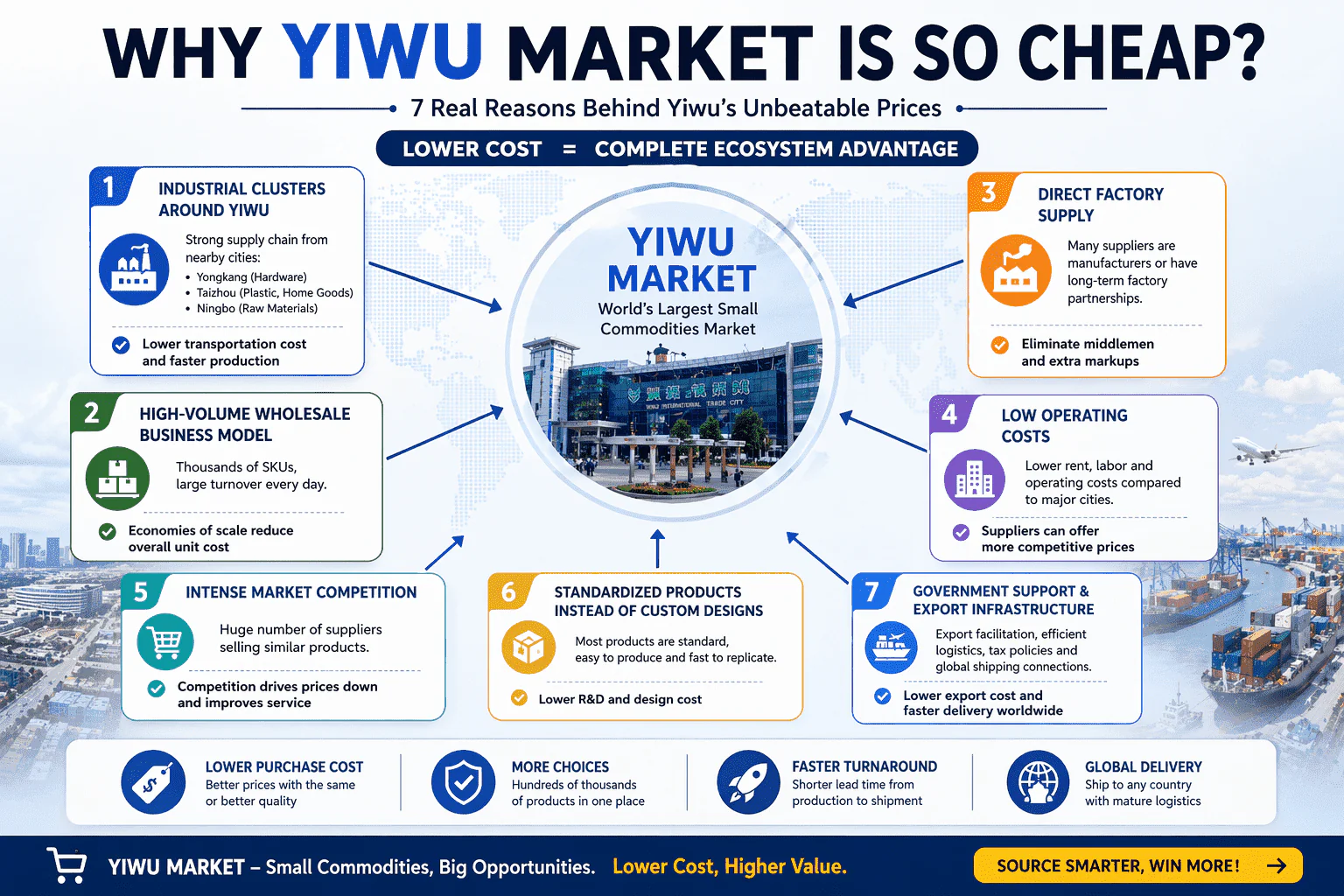
The cost gap between Chinese factory pricing and comparable domestic wholesale prices in most markets runs 40–70%, depending on the product category and order volume (China Briefing, 2024). That gap exists because China’s manufacturing base, concentrated in Zhejiang, Guangdong, and Jiangsu, has spent four decades building supply clusters where raw materials, components, and production are all within a short drive of each other. The efficiency compounds into price.
From Yiwu specifically, buyers access 2.1 million types of products across 26 major categories in a single market complex. The daily average in 2024 hit 220,000 visitors, including around 3,900 foreign traders (Yiwu International Trade City). That density (so many competing suppliers in one place) is what keeps prices down and product variety high.
The price advantages are real. But they only materialise when buyers choose the right platform for their order size, product type, and risk tolerance.
Stat: Yiwu International Trade City spans over 5.5 million square metres with 75,000+ booths and more than 2.1 million product types across 26 categories. The market’s total import-export value reached RMB 614 billion in the first eleven months of 2024 alone (Wikipedia / Yiwu Trade City).
But here’s the catch: choosing the wrong China wholesale website can destroy your business. Counterfeit products, delayed shipments, language barriers, and payment fraud are real risks. That’s why I’ve spent years researching, testing, and vetting the most reliable platforms. This guide will save you months of trial and error.
What Makes a Reliable China Wholesale Website?
Before diving into specific platforms, let’s establish what separates trustworthy China wholesale websites from the risky ones. I’ve learned these criteria the hard way.
Key Features of Trustworthy Platforms:
- Verified Supplier Status: Look for suppliers with authenticated certifications and years of trading history. I always check their “Gold Supplier” badge or equivalent verification.
- Secure Payment Methods: Trade Assurance, Escrow, or secure payment gateways that protect your funds until delivery. Never wire money directly.
- Buyer Protection Programs: Platforms should offer dispute resolution and refund guarantees.
- Responsive Customer Support: Good platforms have support teams available 24/7 in multiple languages.
- Transparent Pricing: No hidden fees or surprise charges at checkout.
- Low Minimum Order Quantities (MOQ): Especially crucial if you’re starting small. Some sites accept orders as low as 1-5 units.
10 China Wholesale Websites Serious B2B Buyers Actually Use
I’ve personally tested each of these platforms over the past three years. Here’s my honest breakdown:
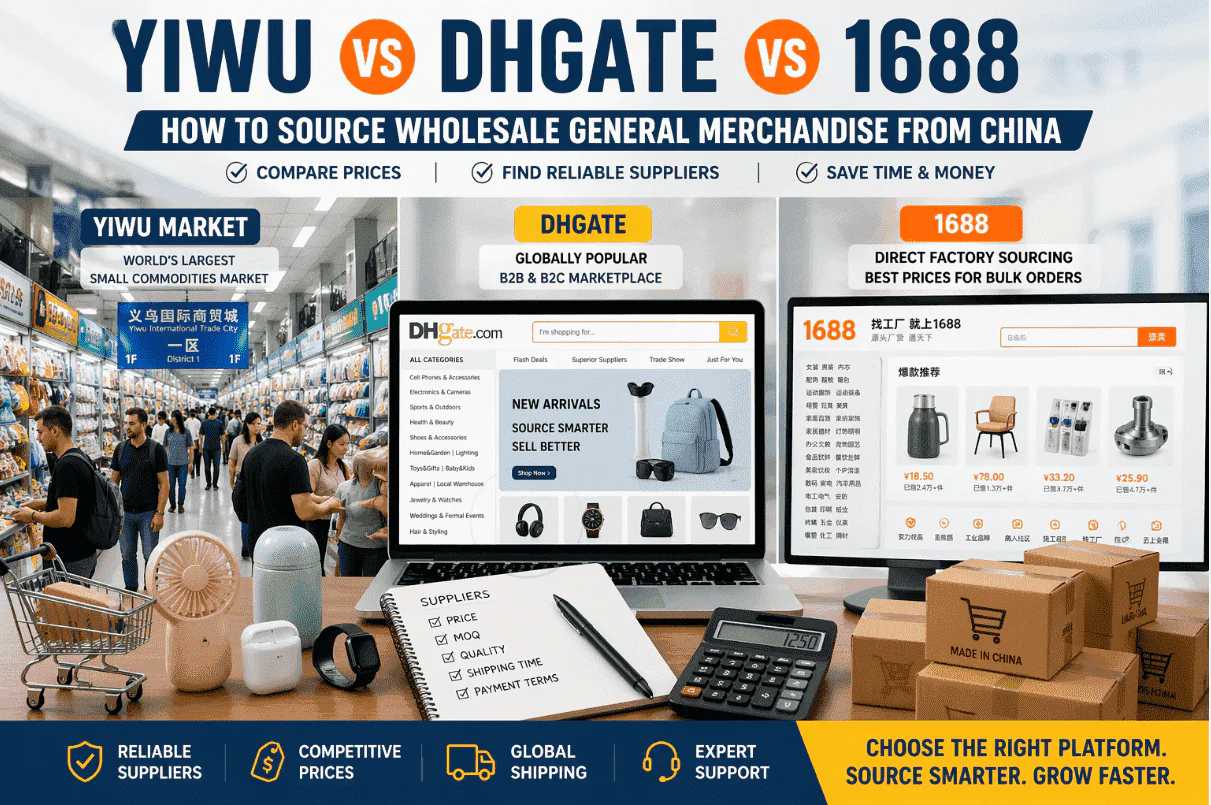
| Platform | Best For | MOQ Range | Typical Price Level | Best Buyer Type |
|---|---|---|---|---|
| Alibaba | Large bulk orders, verified B2B suppliers | 50-500+ units | Lowest factory prices | Experienced importers |
| 1688 | Direct factory pricing, local Chinese market | 10-100 units | Ultra-competitive | Wholesalers, resellers |
| Made-in-China | Industrial & technical products | 100-1000 units | Mid-to-low range | B2B retailers |
| Global Sources | Quality-verified suppliers, trade shows | 200+ units | Premium quality pricing | Quality-focused businesses |
| DHGate | Flexible MOQ, beginner-friendly | 1-50 units | Moderate prices | Small business owners |
| AliExpress | Dropshipping, testing products | 1-10 units | Higher retail markup | Dropshipping beginners |
Pro Tip: On Alibaba, always pay via Trade Assurance, not directly to the supplier’s bank account. The difference matters in a dispute. With Trade Assurance, Alibaba holds the funds until you confirm receipt. Without it, recovering money from a supplier in a different country is extremely difficult.
Alibaba – Best for Experienced Importers
Why I recommend it:
1688.com is Alibaba’s domestic Chinese B2B marketplace, the platform Chinese wholesalers use to buy from factories. Prices run 30–50% lower than the same products on Alibaba’s international platform because you’re dealing with factory-direct listings aimed at domestic buyers. There are no platform fees padded for international sellers.
The barrier is real: the site is entirely in Mandarin, payment requires a Chinese bank account or third-party payment service, and dispute resolution is conducted in Chinese. For international buyers, this platform only works through a local sourcing agent who places orders on your behalf, conducts communication with the factory, and coordinates payment. When our clients source from 1688, we handle the full order process, from initial inquiry through payment to shipping.
✓ Verified suppliers ✓ Secure payments ✓ Bulk discounts
Challenges: High minimum orders (typically 50+ units), language barriers without professional translation, requires understanding Incoterms and shipping logistics.
- Good for: Orders of 50+ units from Gold Supplier-verified manufacturers
- Watch out for: Trading companies listed as manufacturers. Always ask for factory photos, business license, and production capability evidence
- MOQ: Typically 50–500 units; negotiable, especially during slower production periods
1688.com – Best for Factory-Direct Low Prices
Why I recommend it:
1688.com is Alibaba’s domestic Chinese B2B marketplace, the platform Chinese wholesalers use to buy from factories. Prices run 30–50% lower than the same products on Alibaba’s international platform because you’re dealing with factory-direct listings aimed at domestic buyers. There are no platform fees padded for international sellers.
The barrier is real: the site is entirely in Mandarin, payment requires a Chinese bank account or third-party payment service, and dispute resolution is conducted in Chinese. For international buyers, this platform only works through a local sourcing agent who places orders on your behalf, conducts communication with the factory, and coordinates payment. When our clients source from 1688, we handle the full order process, from initial inquiry through payment to shipping.
✓ 50-70% cheaper ✓ Direct factory ✓ Lower MOQ
Challenges: Website is entirely in Chinese, payment requires Chinese bank account or third-party services, longer communication delays.
- Good for: Buyers working with a local agent; getting factory-floor pricing on products first identified on Alibaba
- Watch out for: No built-in Trade Assurance equivalent; quality control depends on your agent’s verification process
- MOQ: Often 10–100 units, lower than Alibaba’s international listings
Example: A buyer sourcing kitchen accessories found the same product on Alibaba for $4.20/unit (MOQ 200) and on 1688 for $2.60/unit (MOQ 100). Working through a Yiwu-based sourcing agent, they ordered 150 units from 1688 at $2.60 plus the agent’s service fee, still $0.90/unit cheaper than Alibaba, and with a lower minimum order. The QC inspection before shipment cost an additional $180 and caught two defective batches before they left the factory.
Made-in-China – Best for Industrial Products
Why I recommend it:
Made-in-China.com focuses on industrial, machinery, and technical products, specifically areas where specifications matter more than aesthetics. Technical depth in product listings is better than most platforms. If you’re sourcing equipment, hardware components, or specialized manufacturing inputs, it’s worth checking here alongside Alibaba.
✓ Technical specs ✓ B2B focused ✓ Industry experts
Challenges: Higher minimum orders, fewer small business options, longer response times.
- Good for: Industrial buyers, equipment sourcing, OEM technical component procurement
- Watch out for: Higher MOQs; longer production lead times for custom specifications
- MOQ: Typically higher than consumer goods platforms
DHGate – Best for Small Business Buyers
Why I recommend it:
DHgate accepts orders as small as one unit, which makes it the right platform when you’re testing a product before committing to a bulk run. Per-unit prices are higher than wholesale rates on Alibaba, but the flexibility matters when you’re evaluating new inventory. Their buyer protection resolves disputes in 7–10 business days in our experience with client orders.
✓ 1-unit MOQ ✓ Beginner-friendly ✓ Buyer protection
Challenges: Prices are higher than bulk wholesale, not ideal for large quantities, some quality inconsistency.
- Good for: Small business buyers, product sampling, low-volume dropshipping operations
- Watch out for: Per-unit price is not competitive for bulk orders; quality consistency varies across individual sellers
- MOQ: 1 unit on most listings
Global Sources: Best for Verified Exporters
Global Sources focuses on manufacturers that already export regularly, with stricter supplier verification than most platforms. It hosts major trade shows in Hong Kong (Electronics Fair, Gifts and Premiums Fair), which means the suppliers listed tend to be experienced with international buyers, documentation requirements, and foreign payment methods. The product catalog is narrower than Alibaba, but average supplier quality is higher.
- Good for: Electronics, tech accessories, consumer goods from established exporters
- Watch out for: Smaller product range than Alibaba; pricing is not always the lowest
- MOQ: Moderate; comparable to Alibaba
AliExpress: Best for Sampling Before Bulk Orders
AliExpress is the consumer-facing version of Alibaba, built for single-unit orders with no MOQ. The margins don’t work for wholesale buying, but it’s the right place to order samples before placing a larger order on Alibaba or 1688. We advise clients to always test a new product through AliExpress first, regardless of which platform they plan to scale on.
- Good for: Product samples, proof-of-concept testing, small-volume dropshipping
- Watch out for: Not economical for real wholesale volumes; wide variation in seller reliability
- MOQ: 1 unit
Chinavasion: Best for Consumer Electronics Resellers
Chinavasion focuses specifically on consumer electronics: gadgets, accessories, and tech products. It offers dropshipping integration and consistent inventory for buyers specialising in this category. Outside of electronics, it’s not relevant.
- Good for: Electronics resellers, tech gadget retailers, dropshippers in consumer electronics
- Watch out for: Narrow category focus; not suitable for other product types
- MOQ: Small to moderate
Tomtop: Best for Consumer Electronics and Outdoor Gear
Tomtop covers consumer electronics, tools, and outdoor and camping products. It functions as a secondary source for buyers who want curated inventory in these categories without managing multiple Alibaba supplier relationships.
- Good for: Consumer electronics, outdoor products, tools
- Watch out for: Smaller supplier base than Alibaba; less room for price negotiation
- MOQ: Small to moderate
Shein Wholesale: Best for Fashion Volume Buyers
Shein runs a wholesale program for fashion buyers. Inventory is massive and trend-driven. The supply chain is built for speed-to-market, not customisation. It’s not suited to private label or OEM work, but for fashion retailers who need high-volume trend-current inventory, the range is hard to match.
- Good for: Fashion retailers needing high-volume, trend-current inventory
- Watch out for: Limited customisation; not designed for brand-building or private label
- MOQ: Higher than most consumer platforms
Direct Factory Sourcing via a Local Agent
Beyond the listed platforms, established importers eventually move toward off-platform sourcing: direct factory relationships managed through a local agent with pre-existing supplier contacts in Yiwu, Guangzhou, or Shenzhen. This bypasses platform fees, typically gets better pricing than listed rates, and allows tighter quality control before goods are packed. The trade-off is that there’s no platform-based buyer protection; your protection comes from your agent’s supplier vetting and your QC process.
- Good for: Regular importers with consistent order volumes, private label buyers, custom-specification orders
- Watch out for: No platform buyer protection; quality depends entirely on your agent’s verification standards
- Agent fees: Typically 5–10% of order value; the fee is usually offset by better pricing and lower defect rates
10+ Legitimate China Wholesale Websites (2026 Update)
General B2B Wholesale Platforms
1. Alibaba – The most comprehensive platform for bulk wholesale products. I’ve completed over 200 transactions here.
2. 1688 – China’s domestic wholesale market with the lowest factory prices. Requires navigation skills and translation.
3. Made-in-China – Excellent for industrial, machinery, and technical products. Established suppliers with verified credentials.
4. Global Sources – Premium platform hosting verified manufacturers. Hosts major trade shows (HK Electronics Fair, Gifts & Premiums Fair).
Niche & Industry-Specific Websites
5. Chinavasion – Specializes in electronics, gadgets, and tech products. Offers dropshipping integration.
6. Tomtop – Great for consumer electronics, GPS devices, and smart gadgets. Reliable quality control.
7. Shein – Fashion wholesale. Massive inventory, but requires significant order volumes.
Small MOQ & Dropshipping Platforms
8. AliExpress – Consumer-friendly version of Alibaba. Perfect for dropshipping with 1-unit MOQ. I test all new products here first.
9. DHGate – Flexible MOQ, secure payments, and excellent for small businesses testing new products.
Private Label & OEM Services
10. Union Home Sourcing – Professional sourcing agent connecting verified Chinese manufacturers with international buyers. Offers quality control, payment facilitation, and shipment consolidation.
Famous China Wholesale Markets by Location
Yiwu Market: The world’s largest small commodity market. If you need accessories, jewelry, decorations, or small items in bulk, Yiwu is unbeatable. I’ve sourced thousands of SKUs here.
Guangzhou Wholesale Markets: Fashion, cosmetics, electronics. Very established ecosystem with wholesale agents available.
Hangzhou Market: E-commerce hub. Great for fashion, home goods, and trending products.
Shenzhen SEZ: Electronics, technology products, components.
How to Safely Buy Wholesale from China: My 5-Step Process
Step 1: Professional Supplier Contact
When I first contacted Chinese suppliers, I made embarrassing mistakes. I learned to write professional inquiry emails with specific details:
- Clear product specifications (exact model, color, quantity)
- Desired unit price and terms (FOB, CIF, etc.)
- Your MOQ flexibility
- Payment preferences
- Expected delivery timeline
Step 2: Negotiate Payment Terms Strategically
Never wire 100% upfront. I learned this lesson when my first supplier disappeared with $3,000. Smart negotiation protects both parties:
- Trade Assurance: Pay through the platform escrow system. Funds release upon delivery.
- 50-50 Split: 50% deposit upfront, 50% before shipping. Reasonable for new suppliers.
- Letter of Credit: Banks guarantee payment upon delivery proof. Standard for large orders.
- Avoid direct bank transfers unless you’ve done business with the supplier before.
Step 3: Verify Suppliers & Perform Audits
I developed a supplier vetting checklist:
- Check company registration and business license
- Review customer feedback (minimum 4.5+ stars)
- Request samples before bulk orders
- Ask for references from other buyers
- Verify manufacturing certifications (ISO, CE, FDA depending on product)
- Use third-party quality inspection services
Step 4: Protect Your Intellectual Property
This is critical if you’re doing private label or custom designs. Before sharing designs:
- Sign an NDA (Non-Disclosure Agreement) with the supplier
- Share only minimal prototypes initially
- Ensure supplier signs IP protection clause
- Register your designs/patents before revealing to manufacturers
Step 5: Choose the Right Shipping Method
Shipping costs dramatically affect your margins. I compare all options:
- Sea Freight (Cheapest): $500-$2000 per container, 30-45 days. Best for bulk orders over 500kg.
- Air Freight (Fast): $5-$15 per kg, 7-10 days. Only for urgent orders.
- DDP Services: Supplier handles all logistics and taxes. Easier but expensive.
- Cargo Consolidation: Combine multiple small orders into one shipment. I save 40% using consolidators.
Pro Tip: I use professional sourcing agents to consolidate orders from multiple suppliers into one shipment. This reduced my shipping costs from $0.80 to $0.25 per unit.
How Do You Verify a China Post Tracking Number?
Three methods work. Start with the official portal, the authoritative source. Use third-party trackers as a backup. Direct contact with China Post is slower but useful when the number genuinely doesn’t appear anywhere after five days.
China Post Official Tracking Portal
Go to track.chinapost.com.cn, enter the tracking number, and look at the results. A valid registered shipment will show scan events from the moment of acceptance at the post office. No results after five business days from the seller’s stated ship date is a signal worth investigating.
One practical note: the official portal can lag by 24-48 hours behind third-party trackers. If you check on day one and see nothing, check again the following day before contacting your seller.
17track.net
17track.net aggregates tracking data from hundreds of carriers including China Post. It often updates faster than the official portal and shows the full scan history in a clean timeline. If a number shows results on 17track but not on the official site, wait 24 hours and check again. If a number shows nothing on 17track after five days, it likely isn’t in the system at all.
The Parcels app is a useful mobile alternative with push notifications for scan updates.
Call China Post Directly
If you’ve waited, checked both sources, and still have no results, call China Post’s international inquiries line: +86 10 11183. The service runs from 08:00 to 21:00 China Standard Time. Have the tracking number and your expected ship date ready. They can confirm whether the number exists in the system and what status it shows internally.
Two Scams That Use Fake China Post Tracking Numbers
Fake tracking numbers aren’t all the same. The two most common types work differently. Knowing the difference helps you respond correctly.
The Customs Fee Scam
The seller provides a tracking number that shows the parcel detained at customs. They then contact you with an urgent message: pay an extra fee to release the package or it will be returned or confiscated. The fee could be $30 or $300 depending on the order size.
Real customs processes don’t work this way. Legitimate customs duties are assessed by your destination country’s customs authority and paid directly by you (or your customs broker) to that authority. Your seller has no role in customs fee collection after the goods have shipped. Any request from a seller to transfer money for customs clearance is a scam. Full stop. Do not pay. Open a dispute instead.
The Delay-to-Expire Scam
Here, the number shows early activity (an acceptance scan or first transit event) and then goes silent. The seller keeps reassuring you the parcel is on its way. By the time you realise nothing is arriving, the seller’s dispute window has closed or the seller has disappeared.
The defence is timing. Most platforms (Alibaba Trade Assurance, PayPal, DHgate buyer protection) have a window for raising disputes, typically 30-90 days from purchase. Don’t wait until tracking is months old before acting. If tracking has shown no new events for 20 days and the seller won’t provide answers, open a dispute while you still can.
Pro Tip: Set a calendar reminder for 25 days after your expected delivery date. If the parcel hasn’t arrived and tracking is stalled, use that reminder to open a dispute before any platform window closes. Don’t let reassurances from the seller push you past the deadline. Once that window closes, recovering funds gets significantly harder.
Do You Really Need a China Sourcing Agent?
When I started, I thought I could handle everything myself. After six months of frustration, I hired a sourcing agent, and it was a game-changer. Let me explain when it’s worth the investment:
You need an agent if:
- You don’t speak Chinese and communication is difficult
- You’re importing high-value items where quality control is critical
- You want to consolidate orders from multiple suppliers to save on shipping
- You need someone to perform factory audits and quality inspections
- You’re struggling with payment disputes or supplier reliability
- You want to focus on your business instead of supplier management
What a good sourcing agent handles:
- Supplier identification and verification
- Price negotiation and payment facilitation
- Quality control and factory audits
- Sample coordination
- Shipment consolidation and logistics
- Problem resolution and dispute management
Ready to Scale Your Wholesale Business?
Working with a professional China sourcing agent like Union Home can save you months of learning curve and reduce costly mistakes. Our team verifies suppliers, negotiates prices, manages quality control, and consolidates shipments—so you can focus on growing your business.
Cheapest Ways to Import from China & Cut Logistics Costs
After three years of importing, I’ve mastered cost optimization. Here’s exactly how I minimized expenses:
Strategy 1: Shipping Consolidation
Instead of shipping individual orders, I collect orders from multiple suppliers and consolidate them into one container. This reduced shipping costs by 40%. A professional consolidation service handles the complex logistics.
Strategy 2: Negotiate Bulk Discounts
Most suppliers offer tiered pricing:
- 1-100 units: $2.50 per unit
- 101-500 units: $2.00 per unit
- 501+ units: $1.50 per unit
By ordering 500+ units quarterly instead of small orders monthly, I saved $10,000+ annually.
Strategy 3: Choose the Right Incoterms
FOB (Free on Board): You arrange shipping from China. Cheapest but requires logistics knowledge.
CIF (Cost, Insurance, Freight): Supplier handles shipping. Expensive but simpler.
DDP (Delivered Duty Paid): Most expensive—supplier handles everything including customs.
Strategy 4: Avoid Common Hidden Costs
- Inspect invoices for hidden surcharges (fuel fees, port fees, documentation fees)
- Negotiate inspection/testing fees into the unit price
- Avoid rush shipping unless absolutely necessary
- Use sea freight instead of air freight when possible
- Plan ahead to avoid expedited orders
What Does a Real China Post Tracking Number Look Like?
A legitimate China Post registered mail tracking number is always 13 characters long: two letters, nine digits, and two final letters. The last two are always CN, confirming China as the origin. A number like RA123456789CN is the standard format. There’s no variation for domestic versus international. The structure is the same.
The first two letters tell you the service type:
- RA or RB: Registered Mail (most common for tracked international parcels)
- CP: China Post Parcel
- EE or EA: EMS Express Mail
- LX or LY: Registered Air Parcel
- UV: Unregistered economy parcel (limited or no international tracking)
Economy (unregistered) options like UV-prefix shipments stop showing tracking updates once the parcel leaves China. If a seller ships unregistered economy mail, the tracking going dark after departure isn’t fraud on its own. It’s a service limitation. The problem is when a seller claims a shipment is registered or express and the number turns out to be economy or fake.
Stat: Package delivery scams were the most reported text-based fraud type in the United States in 2024, with Americans reporting $470 million in losses from text scams overall. Fake shipping notifications ranked above bank impersonation, gift card scams, and prize fraud as the top reported category (FTC, April 2025).
How Can You Tell If a China Post Tracking Number Is Fake?
Most fake tracking numbers fail on one of two tests: the format is wrong, or the tracking data doesn’t match the order details. Neither test requires special tools. You just need to know what to look for.
The Format Doesn’t Match
Start here. Count the characters. If the number isn’t 13 characters, or if it doesn’t start and end with two-letter codes, it’s not a valid China Post registered number. Some fakes use 10-digit numbers, numeric-only strings, or codes that begin with letters not used by China Post (like “ZZ” or “XX”). None of these are valid.
Run the prefix against the list above. If the first two letters aren’t a recognised service code, ask your seller to provide the original shipping receipt from the post office.
The Details Don’t Match Your Order
Even if the format looks right, cross-check the tracking data against what your seller told you. A valid number that’s been reused from another parcel will show real scan events, but the wrong origin city, wrong ship date, or wrong package weight. If you ordered 50kg of goods from Yiwu and the tracking shows a 2kg parcel accepted in Shenzhen on a date before your order was placed, something is wrong.
Check these specifically:
- Acceptance city: should match where your supplier operates
- Acceptance date: should be after you placed the order and paid
- Package weight: should roughly match what you ordered
- Destination country code: should match your shipping address
How Do You Verify a China Post Tracking Number?
Three methods work. Start with the official portal, the authoritative source. Use third-party trackers as a backup. Direct contact with China Post is slower but useful when the number genuinely doesn’t appear anywhere after five days.
China Post Official Tracking Portal
Go to track.chinapost.com.cn, enter the tracking number, and look at the results. A valid registered shipment will show scan events from the moment of acceptance at the post office. No results after five business days from the seller’s stated ship date is a signal worth investigating.
One practical note: the official portal can lag by 24-48 hours behind third-party trackers. If you check on day one and see nothing, check again the following day before contacting your seller.
17track.net
17track.net aggregates tracking data from hundreds of carriers including China Post. It often updates faster than the official portal and shows the full scan history in a clean timeline. If a number shows results on 17track but not on the official site, wait 24 hours and check again. If a number shows nothing on 17track after five days, it likely isn’t in the system at all.
The Parcels app is a useful mobile alternative with push notifications for scan updates.
Call China Post Directly
If you’ve waited, checked both sources, and still have no results, call China Post’s international inquiries line: +86 10 11183. The service runs from 08:00 to 21:00 China Standard Time. Have the tracking number and your expected ship date ready. They can confirm whether the number exists in the system and what status it shows internally.
Two Scams That Use Fake China Post Tracking Numbers
Fake tracking numbers aren’t all the same. The two most common types work differently. Knowing the difference helps you respond correctly.
The Customs Fee Scam
The seller provides a tracking number that shows the parcel detained at customs. They then contact you with an urgent message: pay an extra fee to release the package or it will be returned or confiscated. The fee could be $30 or $300 depending on the order size.
Real customs processes don’t work this way. Legitimate customs duties are assessed by your destination country’s customs authority and paid directly by you (or your customs broker) to that authority. Your seller has no role in customs fee collection after the goods have shipped. Any request from a seller to transfer money for customs clearance is a scam. Full stop. Do not pay. Open a dispute instead.
The Delay-to-Expire Scam
Here, the number shows early activity (an acceptance scan or first transit event) and then goes silent. The seller keeps reassuring you the parcel is on its way. By the time you realise nothing is arriving, the seller’s dispute window has closed or the seller has disappeared.
The defence is timing. Most platforms (Alibaba Trade Assurance, PayPal, DHgate buyer protection) have a window for raising disputes, typically 30-90 days from purchase. Don’t wait until tracking is months old before acting. If tracking has shown no new events for 20 days and the seller won’t provide answers, open a dispute while you still can.
Pro Tip: Set a calendar reminder for 25 days after your expected delivery date. If the parcel hasn’t arrived and tracking is stalled, use that reminder to open a dispute before any platform window closes. Don’t let reassurances from the seller push you past the deadline. Once that window closes, recovering funds gets significantly harder.
Frequently Asked Questions About China Wholesale Sourcing
Is it safe to buy wholesale from China?
Yes, but with precautions. Use platforms with buyer protection (Trade Assurance on Alibaba), verify suppliers thoroughly, request samples, use third-party quality inspection, and never wire 100% upfront. In three years, I’ve had issues with maybe 5% of orders, but platform protection covered most losses.
What’s the best website for buying from China as a beginner?
Start with DHGate or AliExpress. They accept 1-unit orders, have built-in buyer protection, and beginner-friendly interfaces. Once comfortable, graduate to Alibaba for better pricing. This was my exact progression.
Do I need to know Chinese to source from China?
Not necessary. Most platforms have English interfaces, and Google Translate works surprisingly well. However, some smaller sites like 1688 require Chinese navigation. A sourcing agent eliminates this barrier entirely.
What’s the minimum order quantity for Alibaba?
Minimum MOQ varies by supplier, typically 50-500 units. Some suppliers accept lower quantities (10-50 units) if you negotiate. Expect higher unit prices for smaller orders.
How long does shipping from China typically take?
Sea freight: 30-45 days. Air freight: 7-10 days. Express (DHL/FedEx): 3-5 days. Most of my orders arrive via sea freight within 40 days.
Should I use a sourcing agent?
If you’re importing regularly ($10,000+ monthly), yes. The agent fees (typically 5-10% of order value) are justified by better supplier access, quality control, and consolidation savings. For small one-off orders, probably not.
How do I verify if a Chinese supplier is legitimate?
Check: business registration, customer reviews (4.5+ stars), trading history, certifications, request references, verify with trade shows participation, use Trade Assurance on platforms, and request factory photos/videos.
What payment methods are safest when buying from China?
Trade Assurance (Alibaba): Safest. PayPal Goods & Services: Protected but often rejected by Chinese suppliers. Wire transfer: Only after establishing trust. Credit card: Good protection but higher fees. Never use Western Union or cash transfers.
Work with Sourcing Agents Who Handle Shipments Directly
YiwuAgent is based in Yiwu, China. We coordinate product sourcing, QC inspection, and shipment consolidation for B2B buyers in West Africa, South America, and the Middle East. We place orders with suppliers, track shipments from the China side, and flag problems before they become disputes.
If you’re having trouble verifying a tracking number from a supplier, or you want a more reliable process for future orders, contact us here. We respond within one business day.
You may also find it useful to read about how shipment consolidation works for buyers sourcing from multiple Yiwu suppliers, or how we handle pre-shipment QC inspection before goods leave China.
View Related Content